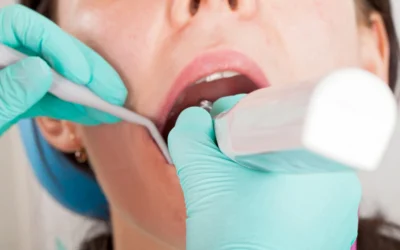
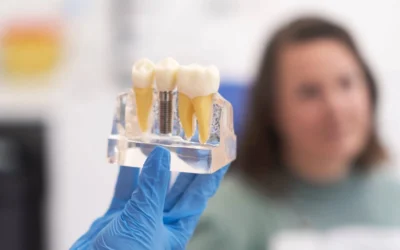
Dental implants in Pasadena, St. Petersburg, FL, are now considered one of the most reliable methods for replacing missing teeth, with studies showing success rates exceeding 95 percent for properly placed implants. More people are choosing implants over bridges or dentures because they offer stability, comfort, and long-term function that closely mirrors natural teeth. Still, many patients hesitate because the process feels lengthy or unfamiliar. Understanding each step can ease uncertainty and help you know exactly what to expect before moving forward.
What Makes Dental Implants Different from Other Tooth Replacement Options
While bridges and dentures remain common methods for replacing missing teeth, dental implants operate in a fundamentally different manner. Instead of relying on neighboring teeth or resting on the gums, an implant is placed directly into the jawbone. This creates a stable foundation that functions much like a natural tooth root.
Bridges often require reshaping adjacent teeth for support, which can affect otherwise healthy tooth structure. Dentures, although helpful for some patients, may shift during eating or speaking and do not address the bone changes in the jaw that occur over time. Dental implants stand apart because they are self-supporting and help maintain jawbone integrity by providing stimulation during everyday use.
Understanding these differences helps explain why dental implants are often chosen for long-term tooth replacement and why the process is designed to prioritize stability, function, and comfort over time.
The Dental Implant Process Explained Clearly
Dental implants are completed in a series of carefully planned steps. While the full process unfolds over several months, each stage serves a distinct purpose. Breaking it down step by step helps remove confusion and allows you to know what to expect before moving forward.
Step 1: Comprehensive Consultation and Evaluation
The dental implant process begins with a detailed consultation designed to gather a complete picture of your oral health. During this visit, your dentist reviews your dental history, overall health, and any previous treatments that may affect implant planning. This conversation is important, as factors such as gum condition, existing restorations, and certain medical considerations can influence how implants are placed and how healing progresses.
Digital imaging plays a key role at this stage. Advanced scans provide a clear view of the jawbone, surrounding teeth, and nerve structures, allowing your dentist to assess bone density and determine where an implant can be placed safely and comfortably. These images also help with visual planning, so placement supports proper bite alignment and a natural appearance.
Step 2: Preparing the Jawbone (If Needed)
A stable jawbone is essential for implant success. In cases where bone volume or density is insufficient, additional preparation may be recommended before implant placement. This preparation strengthens the area where the implant will be placed, helping to ensure long-term stability. While this step can add time to the overall process, it serves an important purpose.
Supporting the jawbone allows the implant to function more like a natural tooth root, improving comfort and durability over time. Healing during this phase varies from person to person. However, most patients find it manageable with clear instructions and follow-up care.
Step 3: Dental Implant Placement
Once the jawbone is ready, the implant is placed. This involves positioning a small titanium post into the jawbone, where it will serve as the anchor for the replacement tooth. Titanium is used because it is biocompatible and integrates well with bone.
The procedure is usually completed using local anesthesia, and patient comfort is carefully monitored throughout. After the implant is placed, the gum tissue is closed over or around the area to support healing. Most patients are surprised by how straightforward this appointment feels.
Step 4: Healing and Bone Integration
After implant placement, healing begins beneath the surface. The body enters a natural process known as osseointegration, during which the jawbone gradually bonds with the implant. This creates a strong and stable foundation for the final restoration.
This stage takes the most time, often several months, though very little appears to be happening externally. Most people return to their normal routines shortly after placement while healing continues quietly below the gums. Follow-up visits allow your dentist to monitor progress and confirm that integration is occurring as expected.
Step 5: Attaching the Abutment
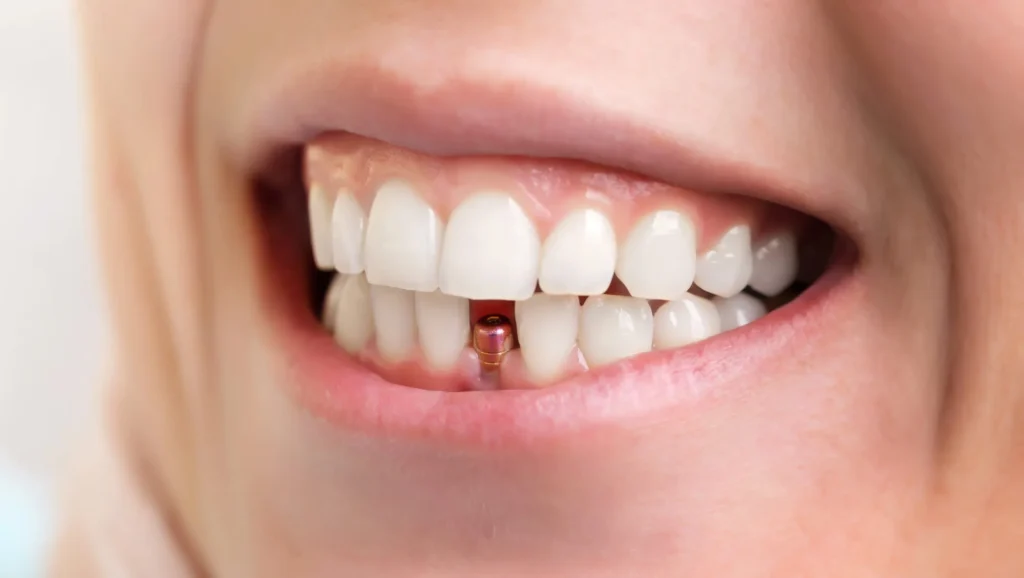
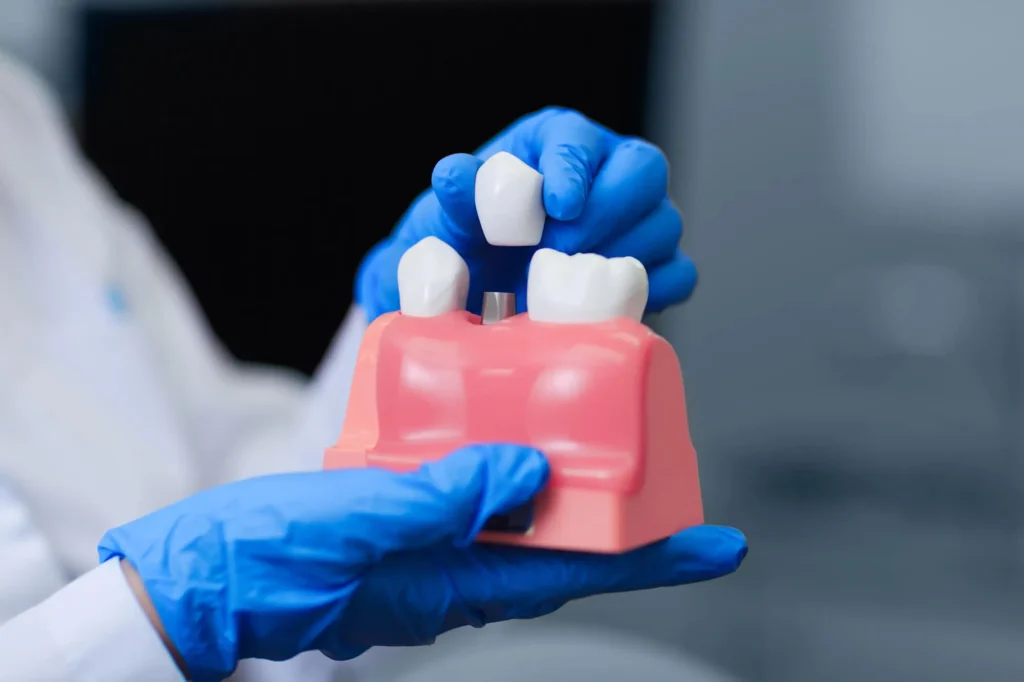
Once the implant has fully integrated, an abutment is attached to it. This small connector extends slightly above the gum line and links the implant to the final crown, bridge, or denture.
The gum tissue is given time to settle around the abutment, shaping a natural-looking contour. This step helps ensure that the final restoration fits comfortably and looks balanced within your smile.
Step 6: Designing and Placing the Final Restoration
The final step is the placement of the restoration. Digital impressions are used to design a crown, bridge, or denture that matches your natural teeth in color, shape, and alignment.
Once secured, the restoration restores both function and appearance. Many patients report that their implant feels natural within a short time and becomes an effortless part of daily life, allowing them to eat, speak, and smile with confidence again.
What the Timeline Usually Looks Like
Although the dental implant process spans several months, most of that time is devoted to healing rather than active treatment. Appointments are spaced intentionally to support predictable results.
Your dentist will outline a clear timeline tailored to your needs, so you always know what’s happening next and why each step is important.
Living With Dental Implants
Dental implants are cared for in much the same way as natural teeth. Daily brushing, flossing, and routine dental visits help maintain gum health and implant stability.
Because implants are anchored in the jaw, they help preserve bone structure and support facial balance. Many patients also notice improved comfort when eating and speaking, along with a renewed sense of confidence in social situations.
Is the Dental Implant Process Right for You?
Dental implants can be suitable for many adults with missing teeth, healthy gums, and adequate bone support. Even if implants were not recommended in the past, advances in planning and technology now offer new possibilities.
A personalized consultation remains the best way to determine whether implants align with your oral health needs and lifestyle.

Considering Dental Implants in Pasadena, St. Petersburg, FL?
At Champagne Dental Care, dental implant care is built around clarity, comfort, and respect for your time. Every step is carefully explained so you know what to expect and feel confident throughout the process.
If you’re thinking about getting dental implants and want care that feels thoughtful, organized, and patient-focused, schedule a consultation with Champagne Dental Care. The goal is simple: restore function and confidence through care that feels supportive from start to finish. Contact us today!